Bernerspace
One MCP server · All your integrations · Zero hassle




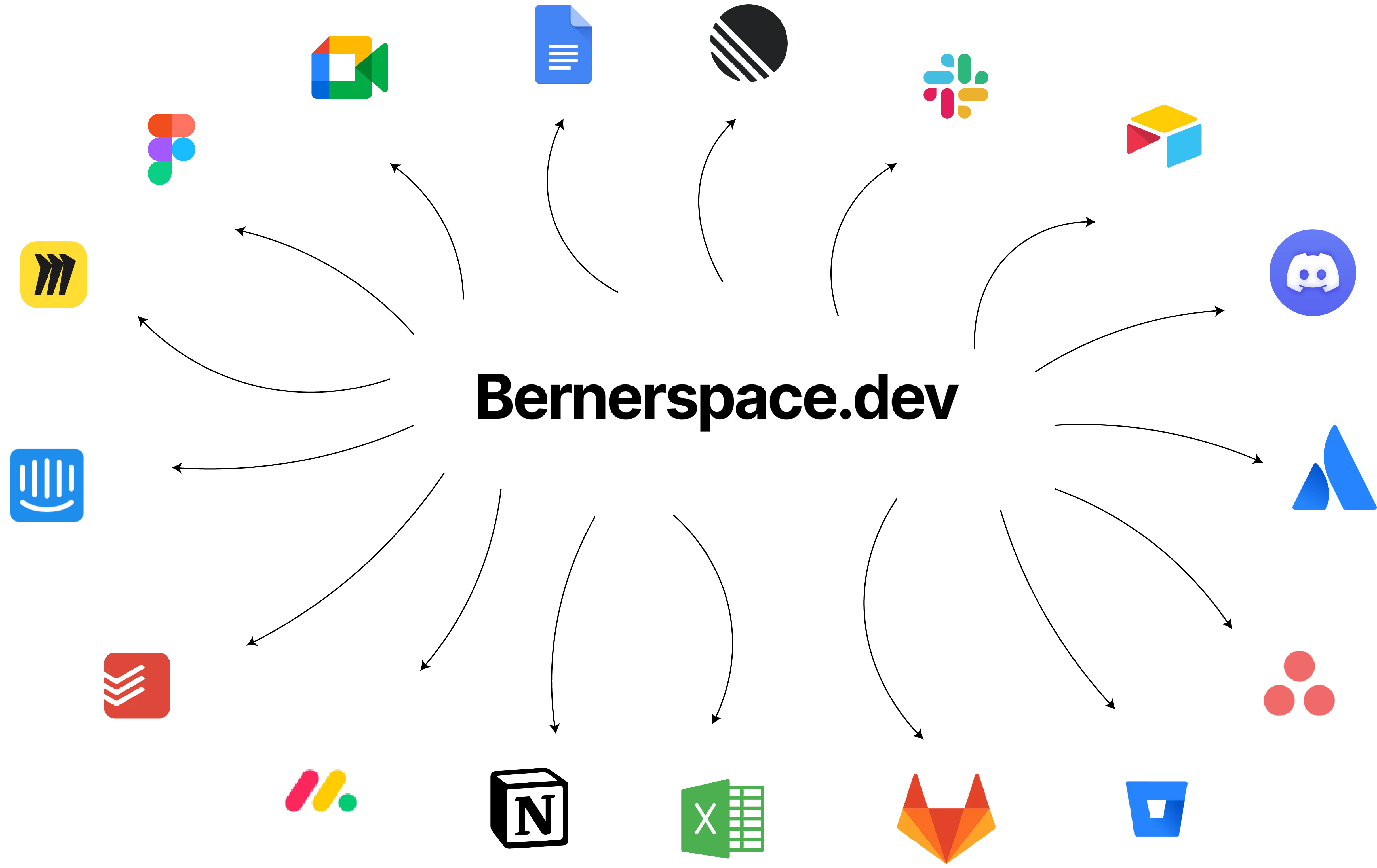
🚀 Unified MCP server for all OAuth-enabled integrations
One server · One JWT · Many tools
✅ Current Live Integration: Slack — 47 tools tested & available
🔜 Coming Soon: Gmail · Google Calendar · Notion
🎯 Goal: 100+ integrations
Why
Using or integrating MCP servers today is painful because:
- Most MCP servers lack OAuth capabilities, limiting user experience.
- Every MCP server requires separate deployment and management, increasing operational overhead.
- Integration chaos: different authentication layers across MCP servers make unified integration nearly impossible.
What You Get
- Single JWT across services via middleware (HS256 or RS256 via JWKS; issuer/audience validated).
- OAuth middleware per integration (Slack live; more coming) with DB‑backed token storage.
- Consistent MCP tools interface for each service.
- Unified endpoints you can self‑host, e.g.:
- http://localhost:8000/slack
- http://localhost:8000/gmail (coming soon)
Current Status
- Current live integration: Slack with 47 fully tested tools available.
→ Learn more about Slack tools: docs/slack/tools.md - Coming soon: Gmail, Google Calendar, and Notion.
📖 Documentation
All setup instructions, integration guides, and examples are available on our Notion docs:
🔗 Bernerspace Quick Start Docs
The docs are updated regularly with:
- Quick start guides for new integrations
- Step-by-step installation instructions
- Usage examples for each tool
- Roadmap and contribution guidelines
Quickstart
- Environment
Create a .env (see .env.example) with the following variables:
# Database
DATABASE_URL=postgresql://localhost:5432/mcp_server

# Auth (choose one)
# Option A: HS256
JWT_SECRET=your-jwt-signing-secret
# Option B: RS256 via JWKS
# JWT_JWKS_URL=https://your-auth-domain/.well-known/jwks.json
# JWT_ISSUER=https://your-auth-domain/
# JWT_AUDIENCE=my-api

# Slack OAuth
SLACK_CLIENT_ID=<slack_client_id>
SLACK_CLIENT_SECRET=<slack_client_secret>
SLACK_REDIRECT_URI=http://localhost:8000/slack/oauth/callback

# Optional: encrypt tokens at rest (comma-separated MultiFernet keys)
# TOKEN_ENCRYPTION_KEYS=
- Install dependencies (choose one)
- Using pip
- python3 -m venv .venv && source .venv/bin/activate
- pip install -e .
- Using uv
- uv venv && source .venv/bin/activate
- uv pip install -e .
- Run the server
- Using Python
- python server.py
- Server will listen on http://localhost:8000
- Using Docker
- docker build -t bernerspace-mcp .
- docker run --env-file .env -p 8000:8000 bernerspace-mcp
- Server will listen on http://localhost:8000
- Using Docker Compose
- docker compose up -d
- Create a JWT to call the MCP server
- python generate_jwt.py --user-id <your_user_id>
- Use the printed token as: Authorization: Bearer TOKEN
OAuth Flow (Slack)
- GET /slack returns
oauth_urland instructions to authorize the workspace. - Slack redirects to
SLACK_REDIRECT_URI(defaults to/slack/oauth/callback). - The server exchanges the code, enriches the token details, and persists it in Postgres.
- Tokens are stored in table
oauth_tokenswith composite key(client_id, integration_type)whereclient_id= your JWT subject (sub).
Database
- Schema managed with Alembic (migrations included).
- Table:
oauth_tokens(client_id, integration_type, token_json, stored_at). - Configure Postgres via
DATABASE_URL. - Tokens can be encrypted at rest when
TOKEN_ENCRYPTION_KEYSis set.
MCP Client Configuration
Example client entry (mcp.json):
{
  "servers": {
    "slack": {
      "url": "http://localhost:8000/mcp/slack",
      "type": "http",
      "headers": {
        "Authorization": "Bearer YOUR_JWT"
      }
    }
  }
}
If the user hasn’t completed OAuth, tool calls will return an object with requires_auth: true and an oauth_url you can open to complete authorization.
VS Code MCP Client Setup
Use this mcp.json in your VS Code user settings (replace JWT with your generated token):
{
  "servers": {
    "slack": {
      "url": "http://localhost:8000/mcp/slack",
      "type": "http",
      "headers": {
        "Authorization": "Bearer JWT"
      }
    }
  },
  "inputs": []
}
LangChain Example
from langchain_mcp_adapters.client import MultiServerMCPClient
from langgraph.prebuilt import create_react_agent

client = MultiServerMCPClient(
    {
        "slack": {
            "transport": "streamable_http",
            "url": "http://localhost:8000/mcp/slack",
            "headers": {
                "Authorization": "Bearer YOUR_TOKEN"
            },
        }
    }
)

tools = await client.get_tools()
agent = create_react_agent("openai:gpt-4.1", tools)
response = await agent.ainvoke({"messages": "Can you send hello message to my #general groups?"})
Docker
You can run Bernerspace MCP in Docker:
docker build -t bernerspace-mcp .
docker run --env-file .env -p 8000:8000 bernerspace-mcp
🚀 Roadmap
We’re just getting started. Our goal is to support 100+ integrations so you can connect any third-party service to your MCP server with ease.
Coming Soon
- 📧 Gmail
- 📅 Google Calendar
- 📂 Google Drive
- 🗂️ Notion
- 💻 GitHub
- 💬 Discord
- 📊 Airtable
- 🔍 ElasticSearch
- 📝 Confluence
…and dozens more on the way.
🤝 Contributing
We welcome contributions of all kinds — whether it’s fixing a bug, suggesting a feature, improving documentation, or just sharing feedback.
Ways to Contribute
- ⭐ Star the repo to show your support and help others discover Bernerspace.
- 🐛 Report a bug so we can fix it quickly.
- 💡 Request a feature or suggest an improvement.
- 🛠️ Submit a Pull Request with code changes, docs updates, or tests.
Stay in Touch
- 📧 Email me at ranga.sumit1999@gmail.com
- 🐦 Follow & DM on Twitter (X): @SumitSandbox
Whether you’re a first-time contributor or an experienced developer, we’d love to hear from you and collaborate!
License
This project is licensed under the MIT License.