ContextLattice
Local-first memory orchestration for AI systems with durable writes, multi-sink fanout, retrieval learning loops, and operator-grade controls.




Overview | Architecture | Installation | Integrations | Troubleshooting | Updates
Why Context Lattice
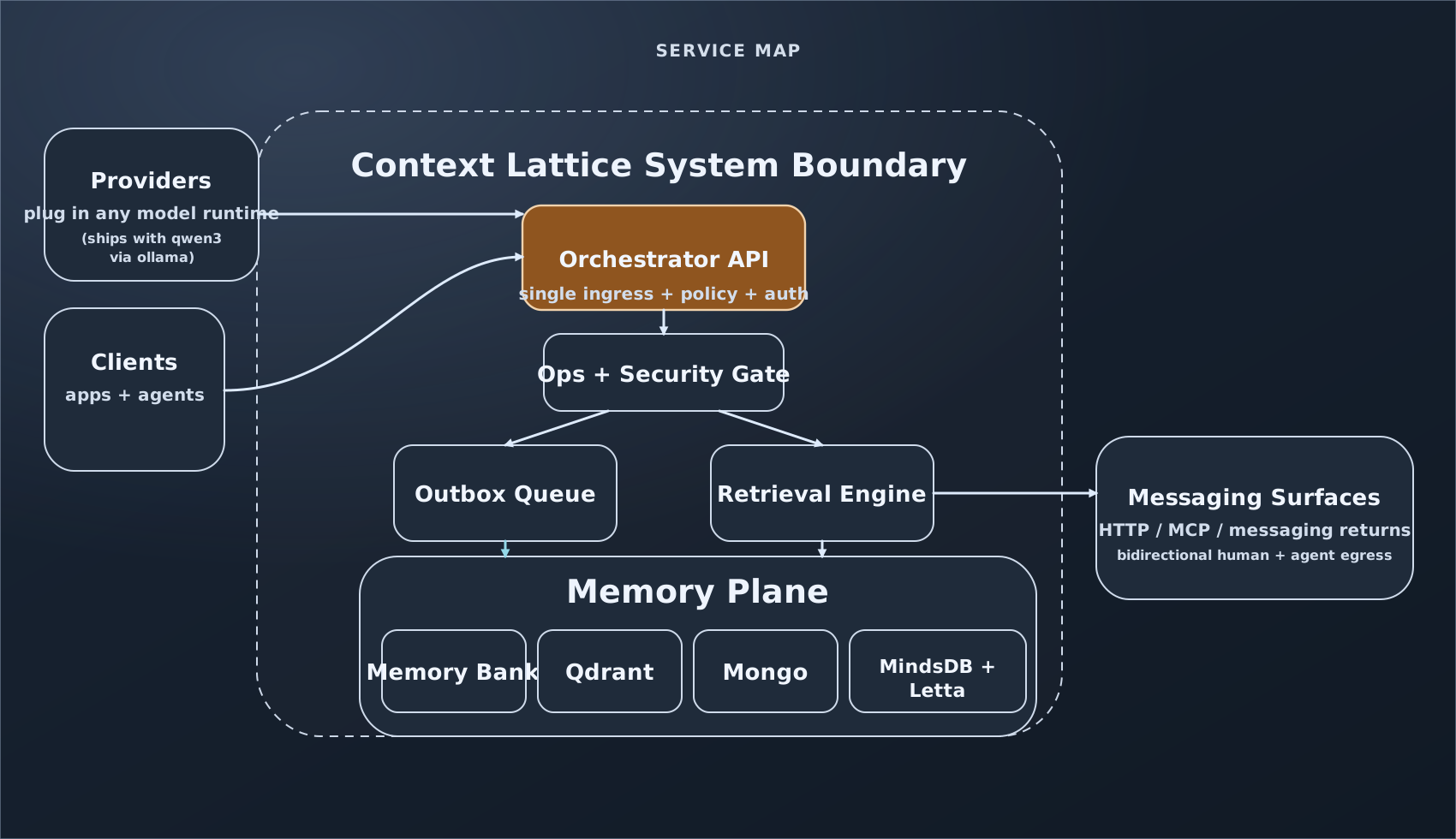
Context Lattice is built for teams running high-volume memory writes where durability and retrieval quality matter more than prompt bloat.
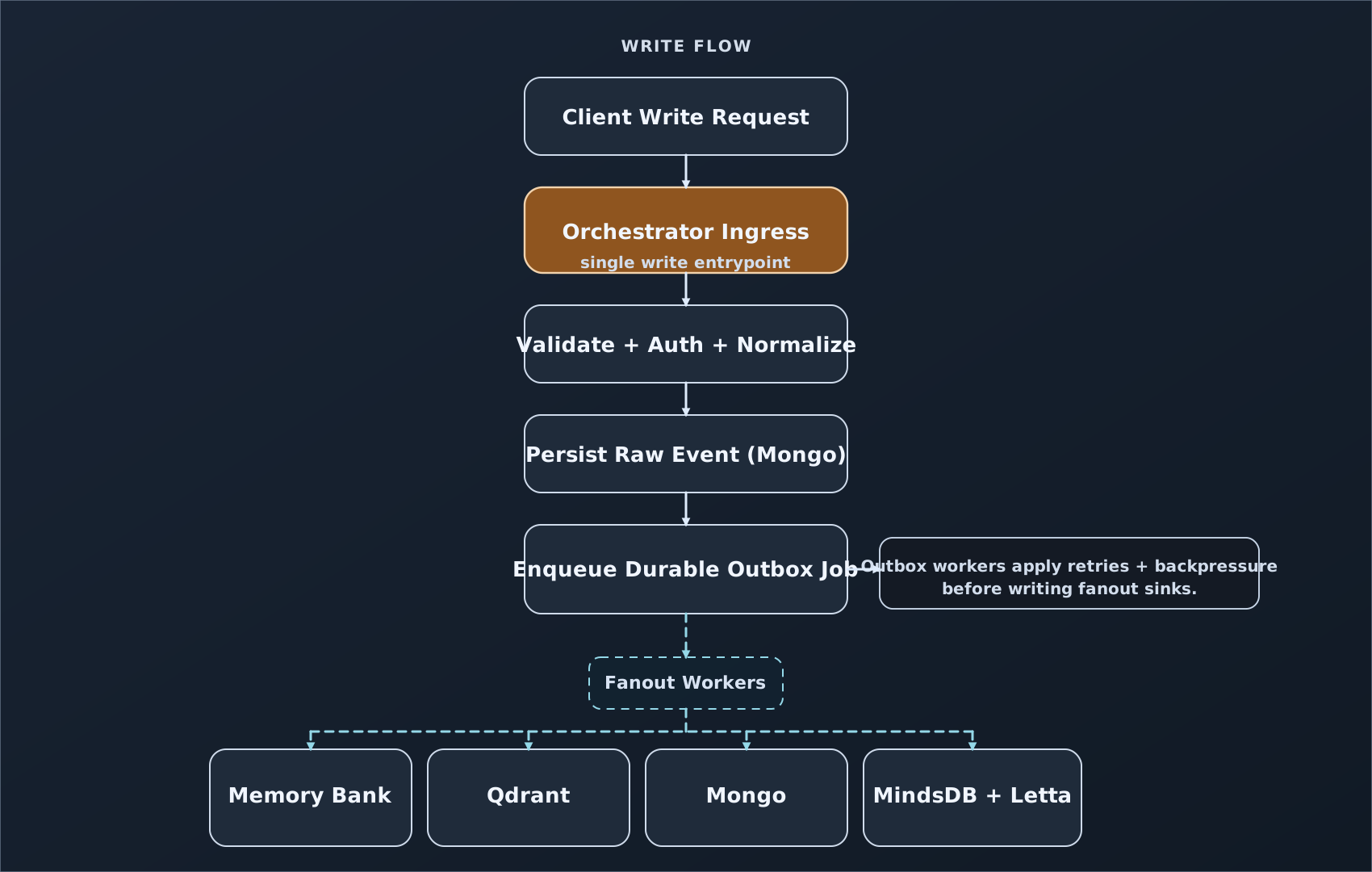
- One ingress contract (
/memory/write) with validated + normalized payloads. - Durable outbox fanout to specialized sinks (Qdrant, Mongo raw, MindsDB, Letta, memory-bank).
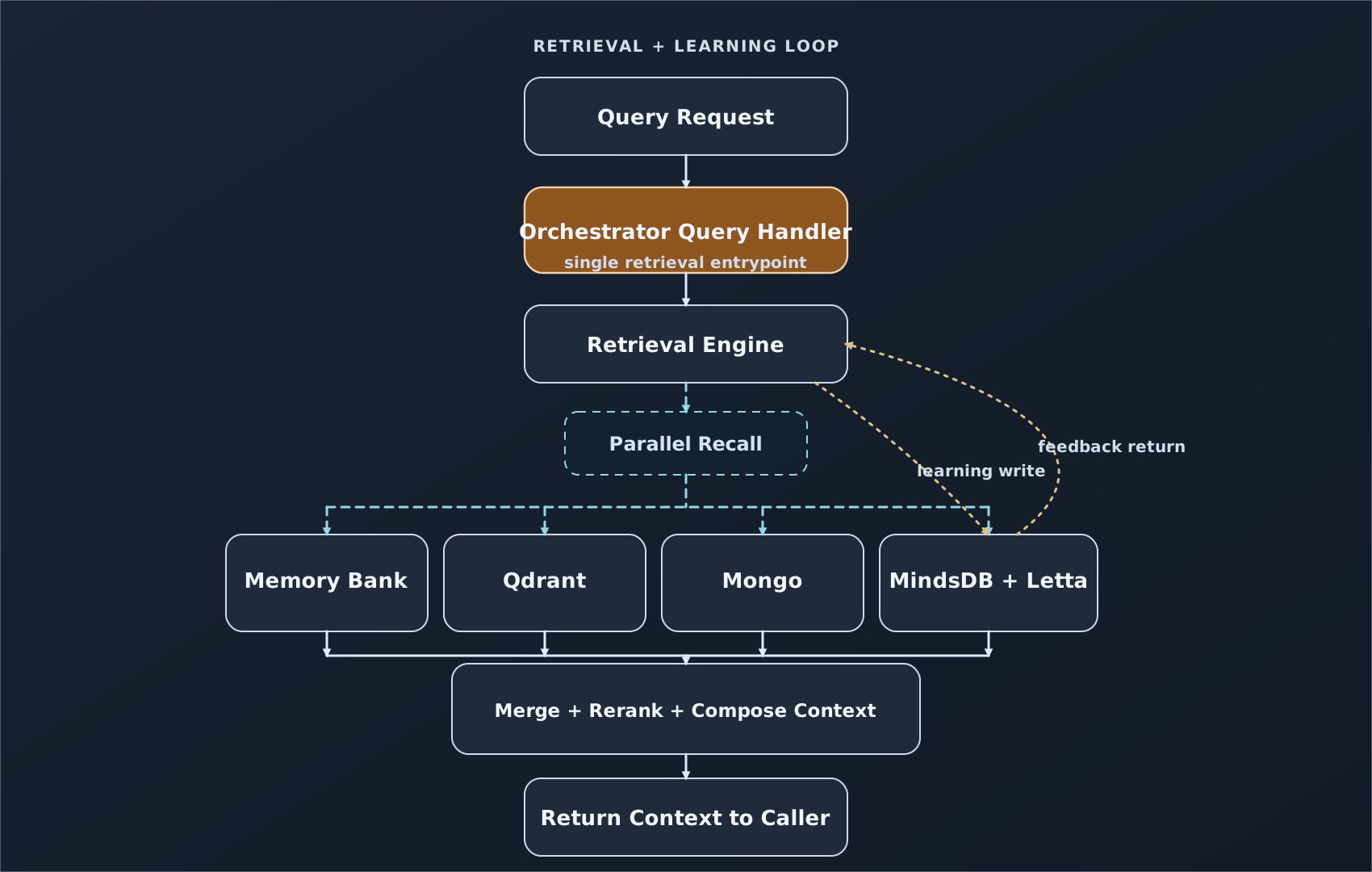
- Retrieval orchestration that merges multi-source recall and improves ranking through a learning loop.
- Local-first operation with optional cloud BYO for specific sinks.
Architecture Snapshot
|
|
|
|
|
Quickstart
Prerequisites
- Container app requirement: a Compose v2-compatible container runtime is required (
docker compose), such as Docker Desktop, Docker Engine, or another runtime that supports Compose v2 - Supported host environments: macOS, Linux, or Windows (WSL2)
- Host machine sized for selected profile (
litevsfull) with enough CPU, RAM, and disk gmake,jq,rg,python3,curl- Tested baseline: macOS 13+ with Docker Desktop
1) Configure environment
cp .env.example .env
ln -svf ../../.env infra/compose/.env
2) One-command quickstart (recommended)
gmake quickstart
This command:
- creates
.envif missing - links compose env
- generates
MEMMCP_ORCHESTRATOR_API_KEYif missing - applies secure local defaults
- boots the stack
- runs smoke + auth-safe health checks
3) 60-second verify (recommended)
ORCH_KEY="$(awk -F= '/^MEMMCP_ORCHESTRATOR_API_KEY=/{print substr($0,index($0,"=")+1)}' .env)"

curl -fsS http://127.0.0.1:8075/health | jq
curl -fsS -H "x-api-key: ${ORCH_KEY}" http://127.0.0.1:8075/status | jq '.service,.sinks'
Expected:
/healthreturns{"ok": true, ...}/statusreturns service and sink states (with API key)
4) Manual bootstrap (optional)
BOOTSTRAP=1 scripts/first_run.sh
MINDSDB_REQUIRED now defaults automatically from COMPOSE_PROFILES.
5) Other launch profiles
# launch using current COMPOSE_PROFILES from .env
gmake mem-up

# explicit modes
gmake mem-up-lite
gmake mem-up-full
gmake mem-up-core

# persist profile mode for future gmake mem-up
gmake mem-mode-full
gmake mem-mode-core
6) Verify health and telemetry
ORCH_KEY="$(awk -F= '/^MEMMCP_ORCHESTRATOR_API_KEY=/{print substr($0,index($0,"=")+1)}' .env)"

curl -fsS http://127.0.0.1:8075/health | jq
curl -fsS -H "x-api-key: ${ORCH_KEY}" http://127.0.0.1:8075/status | jq
curl -fsS -H "x-api-key: ${ORCH_KEY}" http://127.0.0.1:8075/telemetry/fanout | jq
curl -fsS -H "x-api-key: ${ORCH_KEY}" http://127.0.0.1:8075/telemetry/retention | jq
7) First-run toggles (optional)
scripts/first_run.sh --allow-secrets-storage
scripts/first_run.sh --block-secrets-storage
scripts/first_run.sh --insecure-local
scripts/first_run.sh now enforces secure local-first defaults unless explicitly overridden:
- loopback-only host port binding (
HOST_BIND_ADDRESS=127.0.0.1) - production auth posture (
MEMMCP_ENV=production, strict API key requirement) - private status/docs/webhook endpoints
- secrets-safe writes (
SECRETS_STORAGE_MODE=redact)
Security toggles:
--allow-secrets-storage--block-secrets-storage--insecure-local(explicit opt-out)
Agent Operator Prompt (Paste Once)
Paste this into any new agent session (ChatGPT app, Claude chat apps, Claude Code, Codex):
You must use Context Lattice as the memory/context layer.

Runtime:
- Orchestrator: http://127.0.0.1:8075
- API key: MEMMCP_ORCHESTRATOR_API_KEY from my local .env

Required behavior:
1) Before planning, call POST /memory/search with compact query + project/topic filters.
2) During long tasks, checkpoint major decisions/outcomes via POST /memory/write.
3) Before final answer, run one more POST /memory/search for recency.
4) Keep writes compact (summary, decisions, diffs), never full transcripts.
5) If memory endpoints fail, continue task and report degraded-memory mode explicitly.
Detailed playbook: docs/human_agent_instruction_playbook.md
External Agent Task Routing (Generic)
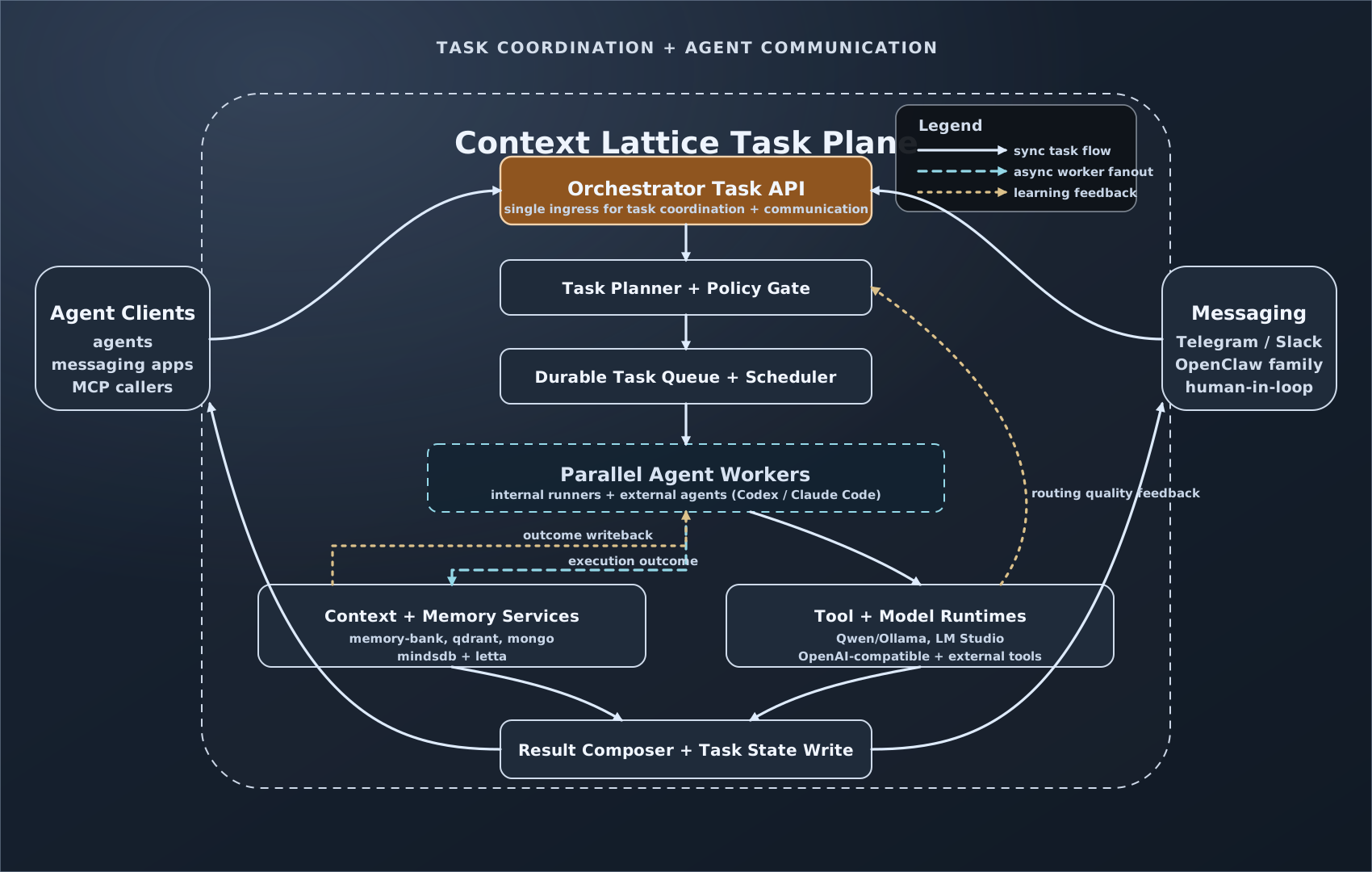
Context Lattice can queue and route tasks to external runners (Codex, OpenCode, Claude Code) and still supports internal application workers.
- External-first pattern: set
agentto the external runner id (codex,opencode,claude-code, or any custom worker name). - Internal app workers remain supported: use
agent=internalor leave unassigned (agentempty /any) for orchestrator workers. - Practical default: external runners as primary path, internal workers as fallback/secondary for high-resource systems.
ORCH_KEY="$(awk -F= '/^MEMMCP_ORCHESTRATOR_API_KEY=/{print substr($0,index($0,"=")+1)}' .env)"

# 1) Create a task targeted to any external runner id.
curl -fsS -X POST http://127.0.0.1:8075/agents/tasks \
  -H "content-type: application/json" \
  -H "x-api-key: ${ORCH_KEY}" \
  -d '{
    "title":"summarize deployment notes",
    "project":"default",
    "agent":"codex",
    "priority":3,
    "payload":{
      "action":"memory_search",
      "query":"deployment notes",
      "project":"default",
      "limit":8
    }
  }'

# 2) Runner claims only tasks assigned to its worker id (plus unassigned/any tasks).
curl -fsS -X POST "http://127.0.0.1:8075/agents/tasks/next?worker=codex" \
  -H "x-api-key: ${ORCH_KEY}"

# 3) Runner reports completion.
curl -fsS -X POST http://127.0.0.1:8075/agents/tasks/<TASK_ID>/status \
  -H "content-type: application/json" \
  -H "x-api-key: ${ORCH_KEY}" \
  -d '{"status":"succeeded","message":"completed by external runner","metadata":{"worker":"codex"}}'
Performance Profile
- Sustained write throughput target:
100+ messages/secondfor typical memory payloads on modern laptop-class hardware. - Outbox protection: fanout retries, coalescing windows, and target-level backpressure to protect core durability.
- Storage pressure controls: retention runner, low-value TTL pruning, optional snapshot pruning, and external NVMe cold path support.
- Retrieval path: parallel source reads with orchestrator merge/rank loop and preference-learning feedback.
Model Runtime
- Ships with a sane local default (
qwenvia Ollama). - Any OpenAI-compatible endpoint can be used when preferred.
- BYO model runtimes supported through:
- Ollama
- LM Studio
- llama.cpp compatible server
- hosted OpenAI-compatible providers
Security defaults
SECRETS_STORAGE_MODE=redactredacts secret-like material before memory persistence/fanout.SECRETS_STORAGE_MODE=blockrejects writes containing secret-like material (422).SECRETS_STORAGE_MODE=allowstores write payloads as-is (operator opt-in).- Compose host bindings default to loopback via
HOST_BIND_ADDRESS=127.0.0.1. - Production strict mode requires
MEMMCP_ORCHESTRATOR_API_KEY.
Main branch release gate (v1.0.0)
Enforce PR-only merges on main with CODEOWNERS approval (.github/CODEOWNERS is * @sheawinkler):
scripts/enable_main_branch_protection.sh main 1
If GitHub returns Upgrade to GitHub Pro or make this repository public, switch repo visibility or plan, then rerun the command.
Web 3 Ready
- IronClaw can be enabled as an optional messaging surface without changing the core local-first deployment.
- OpenClaw/ZeroClaw surfaces now run with strict secret-leakage protections by default.
- IronClaw docs and architecture conventions are excellent references for operator-facing completeness.
# optional IronClaw bridge
IRONCLAW_INTEGRATION_ENABLED=true
IRONCLAW_DEFAULT_PROJECT=messaging

# strict secret guard for openclaw/zeroclaw/ironclaw messaging surfaces
MESSAGING_OPENCLAW_STRICT_SECURITY=true
Ingress endpoints:
POST /integrations/messaging/openclawPOST /integrations/messaging/ironclawPOST /integrations/messaging/command@ContextLattice task create|status|list|approve|replay|deadletter|runtime
API Surface (selected)
POST /memory/writePOST /memory/searchPOST /integrations/messaging/commandPOST /integrations/messaging/openclawPOST /integrations/messaging/ironclawPOST /integrations/telegram/webhookPOST /integrations/slack/eventsPOST /agents/tasksGET /agents/tasksGET /agents/tasks/runtimeGET /agents/tasks/deadletterPOST /agents/tasks/{task_id}/replayPOST /agents/tasks/recover-leasesGET /telemetry/memoryGET /telemetry/fanoutGET /telemetry/retentionPOST /telemetry/retention/run
Docs Index
- Runbook:
docs/onprem_full_runbook.md - Performance:
docs/performance.md - Retention operations:
docs/retention_ops.md - Storage controls:
docs/storage_and_retention.md - Orchestrator enhancements:
docs/orchestrator_enhancements.md - Launch checklist:
docs/launch_checklist.md - Submission requirements audit:
docs/submission_requirements.md - Human agent instruction playbook:
docs/human_agent_instruction_playbook.md - Public messaging package:
docs/public_messaging_package.md - Legal and licensing:
docs/legal/README.md - New repo migration plan:
docs/contextlattice_repo_migration_plan.md
Pre-submit verifier:
gmake submission-preflight
python3 scripts/submission_preflight.py --online
Private/Public Sync Notes
This repository (sheawinkler/ContextLattice) is the primary codebase.
Public landing collateral remains mirrored in the dedicated public overview mirror repository.
- Source:
docs/public_overview/ - Sync script:
scripts/sync_public_overview.sh
License
Business Source License 1.1 with change-date transition to Apache-2.0.
See LICENSE and docs/legal/README.md.