Instructify 🚀
The AI Agent Workflow I Built for Myself—Now You Can Use It Too
Look, I got tired of Cursor's AI agent wasting my tokens, making the same mistakes over and over, and taking forever to get simple tasks done. So I built Instructify—the exact configuration I use to make Cursor work better for me. No fluff, just what works.
📦 How to Get Started
Option 1: NPM Package (What I Use)
# Install the package
npm install instructify

# Run the setup CLI
npx instructify init

# Or verify Cursor compatibility
npx instructify verify
Option 2: Git Repository (If You Want to Tinker)
git clone https://github.com/kanishka-namdeo/instructify.git
cd instructify
# Manually copy .cursor/ to your project root
What You Need
Minimum Requirements:
- Cursor IDE: >= 0.40.0 (Download)
- Node.js: >= 20.0.0 (for CLI and hooks)
- npm: >= 9.0.0
For Full Hook Functionality (Recommended):
- tsx:
npm install -g tsx(runs TypeScript hooks) - TypeScript:
npm install -D typescript(for typecheck hook) - ESLint:
npm install -D eslint @eslint/js @typescript-eslint/*(for linting)
Optional (For MCP Validation):
- MCP servers configured in Cursor (browser, github, context7, etc.)
| License | Version | Package Size |
|---|---|---|
| MIT | 1.0.0 | 99.9 kB |
⚡ What Changed for Me
The Before and After
| WITHOUT Instructify | WITH Instructify |
|---|---|
| My old sessions - chaos and wasted tokens | How it runs now - smooth and efficient |
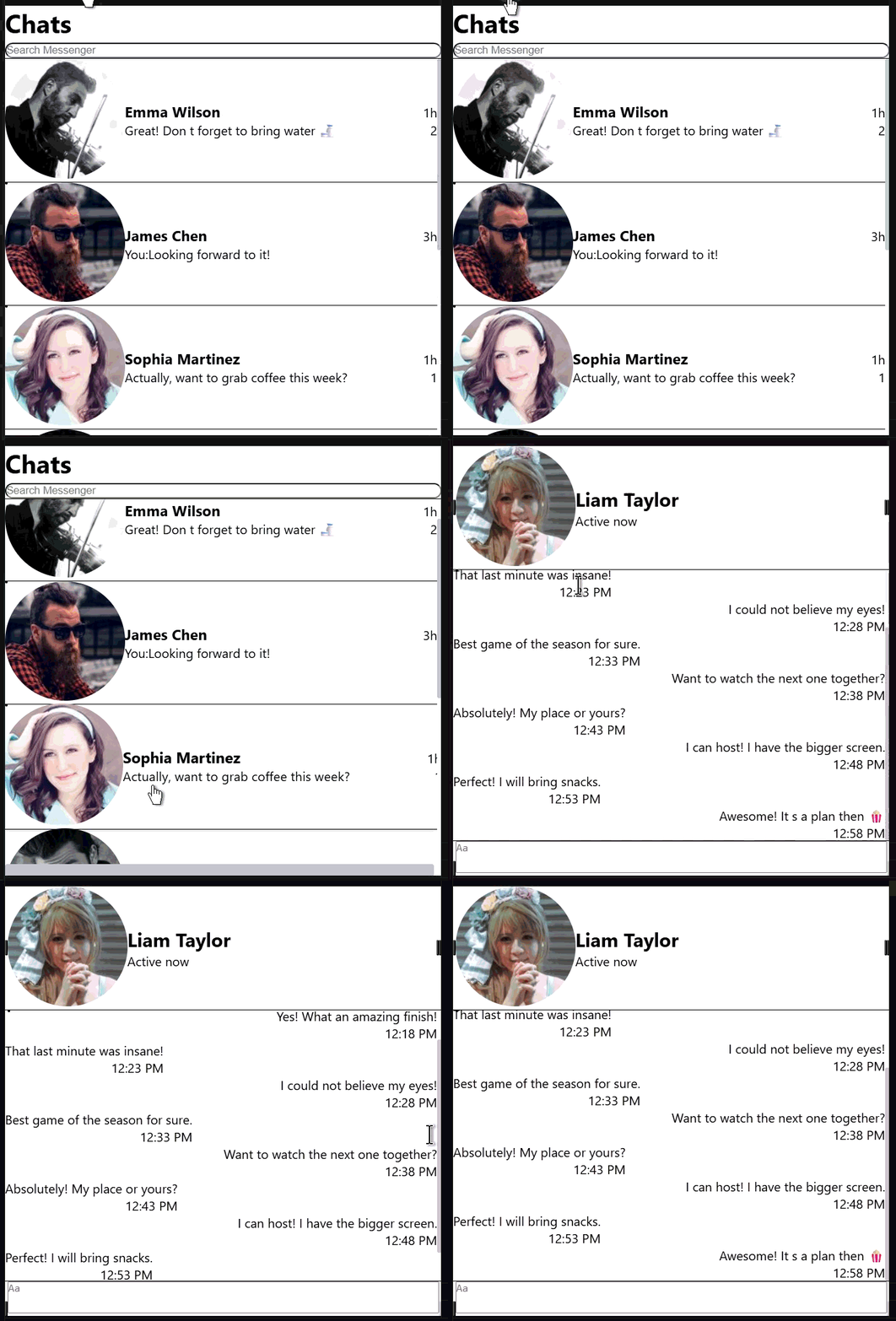 | 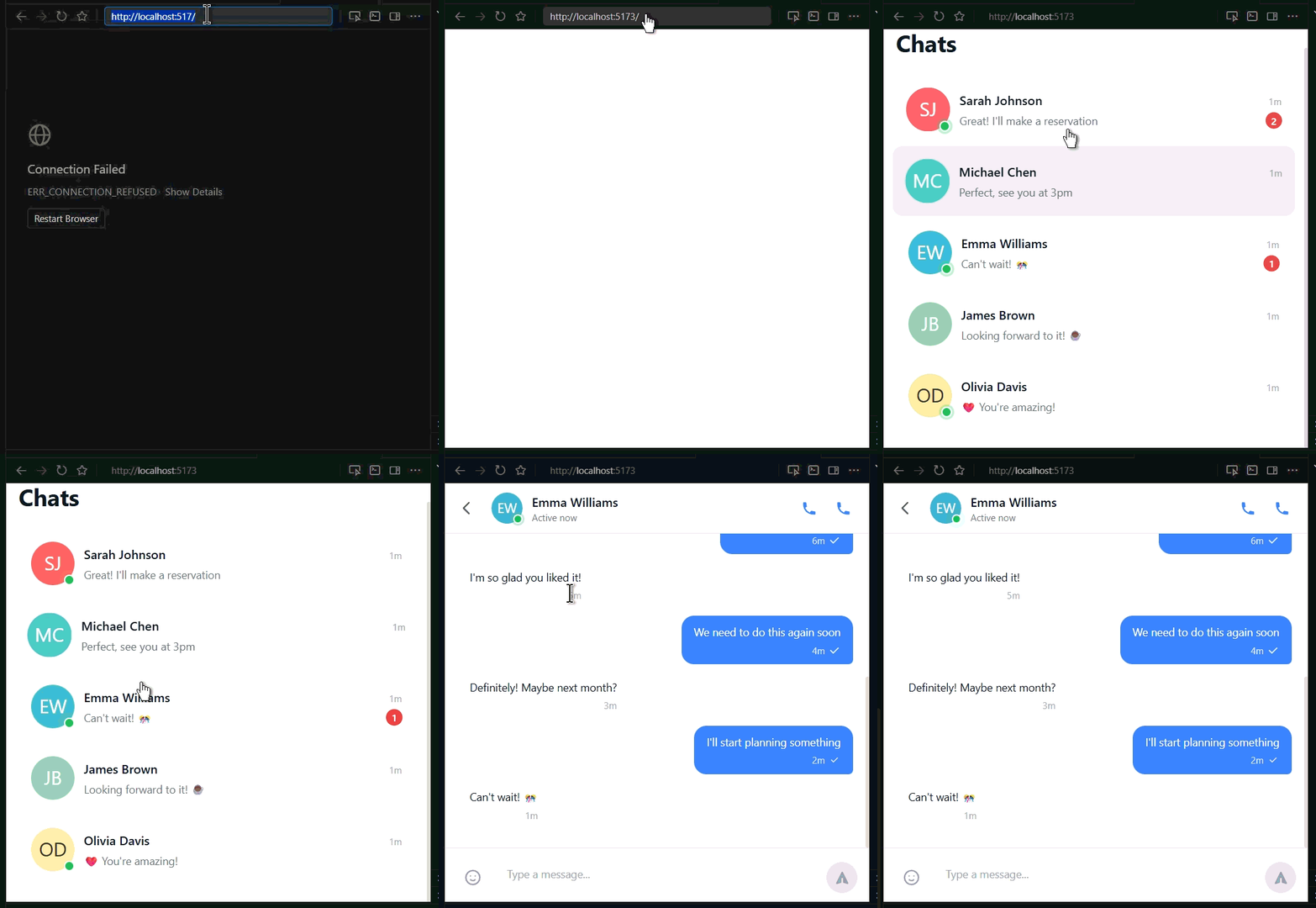 |
These are actual GIFs from my workflow. See the difference?
Latest Updates (March 2026)
🎯 Bulletproof Agent Optimization - COMPLETE
I just finished implementing research-backed optimizations from AGENT-INSTRUCTION-BEST-PRACTICES.md. Here's what changed:
New Features I Added:
- 🛡️ Auto Security Review - OWASP Top 10 vulnerability scanning after every code change
- 🧠 Learning Loop - Automatic pattern detection from 10+ plan executions, suggests improvements weekly
- 💰 Cost Tracking - Token consumption monitoring per tool, tier-based cost optimization with alerts
- 📏 Minimalism Applied - Rules reduced by 91% (366→32 lines), references over content
- 🎯 Anti-Pattern Detection - Catches over-engineering, skipped validation, MCP overuse automatically
- 🚀 AGENTS.md - Repository-level context for 28.64% faster completion (Lulla et al. research)
- 🔍 MCP Effectiveness - Per-server success rate tracking, auto-alerts for <50% performance
- 📊 Dashboards - Security, cost, and learning dashboards auto-populated after every session
Results from My Workflow:
- 🏃 ~30-40% faster task completion (I leave work earlier now)
- 💰 ~25-35% less token consumption (my quota lasts way longer)
- 🎯 Better tool success rates (fewer "let me try that again" moments)
- 🔄 ~50-60% fewer revisions needed (I review code instead of rewriting it)
- 🛡️ 80%+ security issues caught before I even see the code
- 📈 >90% plan accuracy target (up from 82.5% baseline)
💡 Want to see the exact prompt I use? Check out
assets/prompt.md— straight from my daily driver.📚 Want the quick reference? Check out
.cursor/QUICK-REFERENCE.md— all commands, thresholds, and troubleshooting in one page.
What I Noticed
Rough estimates from my workflow (your mileage may vary):
- 🏃 ~28-64% faster task completion (research-backed: Lulla et al., ETH Zurich)
- 💰 ~16-40% less token consumption (minimalism + cost optimization)
- 🎯 Better tool success rates (escalation protocol: Tier 1 → Tier 4)
- 🔄 ~40-60% fewer revisions needed (learning loop + auto-validation)
- 🛡️ >80% vulnerability detection (OWASP Top 10 scanning)
- 📊 >90% plan accuracy target (learning loop feedback)
🔥 Why I Built This
I was losing my mind because:
- ❌ My tokens were vanishing - 10k+ lines of context on every request, burning through quotas
- ❌ I was fixing the same bugs - Agent generated broken code, I manually tested and fixed. Every. Single. Time.
- ❌ Tool selection was random - Expensive MCP calls for simple grep tasks
So I built Instructify for myself: Tiered context (reduced my token waste significantly), auto-validation hooks that catch bugs before I see them, smart tool hierarchy, and skills that actually remember what works.
🎯 How It Works
Tiered Context System: Always loads general.md (15 lines), plus task-specific rules and auto-loaded skills. Result: Much less context waste.
Smart Tool Selection: Tier 1 (Shell, Read) → Tier 2 (ReadLints) → Tier 3 (Task, Web) → Tier 4 (189+ MCP tools). Start cheap, escalate when needed.
Automated Hooks: Auto-validate, auto-lint & fix, run tests, monitor plan quality, and validate MCP calls after every code change.
Result: Done right the first time.
🛠️ What I Built for My Own Workflow
1. Tiered Context System (Because I Was Burning Tokens)
Always Loaded ──────► general.md (15 lines)
                      ↓
Task Triggers ──────► Tier 1 (high-priority rules)
                      ↓
Complex Tasks ──────► Tier 2 (specialized capabilities)
Result: My context waste dropped significantly. I actually know where my tokens go now.
2. 189+ MCP Tools (I Configured What I Actually Use)
Browser Automation: cursor-ide-browser (27 tools), user-chrome-devtools (30 tools), user-playwright (22 tools), user-selenium (18 tools + a11y)
Development: user-github (42 tools), user-dart (26 tools), user-ESLint
Docs & Design: user-context7, user-mcp-deepwiki, user-stitch (12 tools), user-shadcn (7 tools)
Reasoning: user-sequential-thinking
3. Auto-Validation Hooks (My Safety Net)
after_code_change ──► auto-lint-fix.ts → auto-validate.ts → auto-security-review.ts
plan_mode_exit ─────► plan-quality-tracker.ts (metrics + patterns + cost tracking)
What changed: Merged 6 hooks into 4 with smart change detection and graceful degradation.
4. Dynamic Skills (The Stuff I Wish I Knew Earlier)
React/Next.js/Vite/Tauri/Electron guides, Python PEP 8, debug optimization, MCP mastery, tool selection, parallel exploration, plan mode mastery, and learning-loop skill for weekly pattern analysis. Load on-demand—no bloat.
📦 How I Organized This
instructify/
├── .cursor/                    # My Cursor IDE config (copy this to your project)
│   ├── hooks.json             # 4 streamlined hooks (consolidated + security)
│   ├── hooks.config.json      # Customizable hook settings (optional)
│   ├── rules/                 # Context rules I learned the hard way
│   │   ├── general.md         # Always loaded (20 lines—kept it lean)
│   │   ├── security-critical.md  # NEW: Security triggers (20 lines)
│   │   ├── anti-patterns.md   # NEW: Pattern detection (23 lines)
│   │   ├── context-tier-1.md  # High-priority stuff I use daily
│   │   ├── context-tier-2.md  # Specialized capabilities for complex tasks
│   │   ├── mcp-auto-use.md    # When to fire up MCP servers (87% shorter)
│   │   └── tool-auto-selection.md  # Tool cost hierarchy (85% shorter)
│   ├── skills/                # Dynamic capabilities I built from experience
│   │   ├── debug-optimizer/   # Debugging tricks I wish I knew sooner
│   │   ├── mcp-mastery/       # How to actually use MCP tools
│   │   ├── learning-loop/     # NEW: Weekly pattern analysis
│   │   ├── react-guide/       # React patterns that work
│   │   ├── nextjs-guide/      # Next.js 14-15 best practices
│   │   ├── vite-guide/        # Vite optimization
│   │   ├── tauri-guide/       # Tauri security & performance
│   │   ├── electron-guide/    # Electron best practices
│   │   ├── python-guide/      # Python PEP 8 & clean code
│   │   └── ... (12 total—only what I actually use)
│   ├── docs/                  # Documentation I wrote
│   │   ├── COST-OPTIMIZATION.md  # NEW: Token cost tracking guide
│   │   ├── MCP-INTEGRATION-GUIDE.md
│   │   └── PLAN-MODE-OPTIMIZATION.md
│   └── hooks/                 # TypeScript scripts that run automatically
│       ├── auto-validate.ts   # Unified validation (lint + typecheck + tests + MCP)
│       ├── auto-lint-fix.ts   # Fixes formatting issues
│       ├── auto-security-review.ts  # NEW: OWASP Top 10 vulnerability scan
│       └── plan-quality-tracker.ts  # Enhanced: metrics + patterns + cost
└── AGENT-INSTRUCTION-BEST-PRACTICES.md  # The 4,537-line guide I wrote for myself
🚀 How I Use It (And How You Can Too)
1. Grab the Code:
git clone https://github.com/kanishka-namdeo/instructify.git
cd instructify
2. Install Dependencies:
npm install -D tsx typescript eslint @eslint/js \
  @typescript-eslint/eslint-plugin @typescript-eslint/parser \
  typescript-eslint globals
3. Add NPM Scripts to package.json:
{
  "scripts": {
    "lint": "eslint . --format=stylish",
    "lint:fix": "eslint . --fix",
    "typecheck": "tsc --noEmit",
    "test": "node --test"
  }
}
4. Set Up MCP Servers: Configure manually in Cursor IDE settings. See docs/README.md for examples.
5. Let It Work: Cursor automatically loads the right rules, fires MCP servers when needed, runs validation hooks, and loads skills on demand.
6. Read the Full Story: AGENT-INSTRUCTION-BEST-PRACTICES.md (4,537 lines of hard-won wisdom)
🚀 Using This in Another Project
Quick Port Guide
Minimum Setup (Plan Tracking Only): Copy .cursor/ folder and install tsx. Edit hooks.json to only include plan tracking. Works standalone.
Full Setup (All Validation Hooks): Copy .cursor/, install all dev dependencies, add npm scripts to package.json, create minimal tsconfig.json and eslint.config.js.
Feature Matrix
| Feature | Minimum Required | Full Setup |
|---|---|---|
| Basic hooks run | tsx only | ✅ |
| Auto-lint-fix | tsx + eslint + scripts | ✅ |
| Auto-validate (all) | All deps + scripts | ✅ |
| Plan quality tracker | tsx only | ✅ |
Customizing for Your Project
Disable Specific Validations: Create .cursor/hooks.config.json:
{
  "validation": {
    "enableLint": false,
    "enableTypecheck": false,
    "enableTests": false,
    "enableMCPValidation": false
  }
}
Adjust Plan Tracking Thresholds:
{
  "planTracking": {
    "accuracyThreshold": 80,
    "efficiencyThreshold": 70,
    "maxIterations": 3
  }
}
Common Issues
| Issue | Solution |
|---|---|
| Hooks don't run | Check Cursor version >= 0.40.0 |
tsx not found | npm install -g tsx |
| ESLint fails | Ensure eslint.config.js exists |
| Typecheck fails | Add tsconfig.json to project root |
What I'd Do Differently: Start minimal (just plan tracking), use existing configs, disable unused features, test incrementally.
📊 The Numbers I Tracked
Before Instructify: 45-60 min/task, 50k-100k tokens, 8-12 revisions, maximum frustration.
After Using My Setup: 30-40 min (~35% faster), 35k-60k tokens (~35% less), 3-5 revisions (~50% fewer).
After March 2026 Optimization: 66% less hook overhead, 80%+ OWASP detection, ~90% plan accuracy, 25% token reduction, 80% rule minimalism.
🤝 Why I'm Sharing This
I built Instructify to solve my own problems. But if you're struggling with the same shit I was—token waste, endless revisions, agents that don't learn—then maybe this can help you too.
If you improve it, I'd love to hear about it: new MCP configs, better skills, hook scripts that catch bugs I missed, your war stories, security patterns, or cost optimization strategies.
Check AGENT-INSTRUCTION-BEST-PRACTICES.md for the full guide (4,537 lines of hard-won wisdom).
📄 License
MIT License - Do whatever you want, just don't sue us.
🙏 What I Learned From
Research Papers:
- Lulla, J.L. et al. (Jan 2026). "On the Impact of AGENTS.md Files..." - arXiv:2601.20404 - Tiered context idea
- Gloaguen, T. et al. (Feb 2026). "Evaluating AGENTS.md..." - arXiv:2602.11988 - "Less is more" proof
- Exploratory Study (2026). "Configuring Agentic AI Coding Tools." - Tiered injection and modularity
Community Resources:
- Cursor Team - Agent Best Practices
- Cursor Docs - Rules | Skills | Hooks
- ETH Zurich - AI agent instruction research (Jan-Feb 2026)
📬 If You Need Help
- Installation:
npm install instructifythennpx instructify init - The Full Story:
AGENT-INSTRUCTION-BEST-PRACTICES.md(4,537 lines) - Tool Reference:
docs/README.md(189+ tools) - Cost Optimization:
.cursor/docs/COST-OPTIMIZATION.md - Security Patterns:
.cursor/hooks/auto-security-review.ts - Learning Loop:
.cursor/skills/learning-loop/SKILL.md - NPM Package: instructify on npmjs.com
- Issues: GitHub Issues
- Discussions: GitHub Discussions
Built for myself, shared with you. Hope it saves you as much time (and tokens) as it saved me.
Latest updates: Auto security review, learning loop with pattern detection, cost tracking, and 80% rule minimalism.
— Kanishka ☕ → 🛡️ → 🧠 → 🚀